

Sustainable Habitats
Defend and strengthen sustainable equine habitats
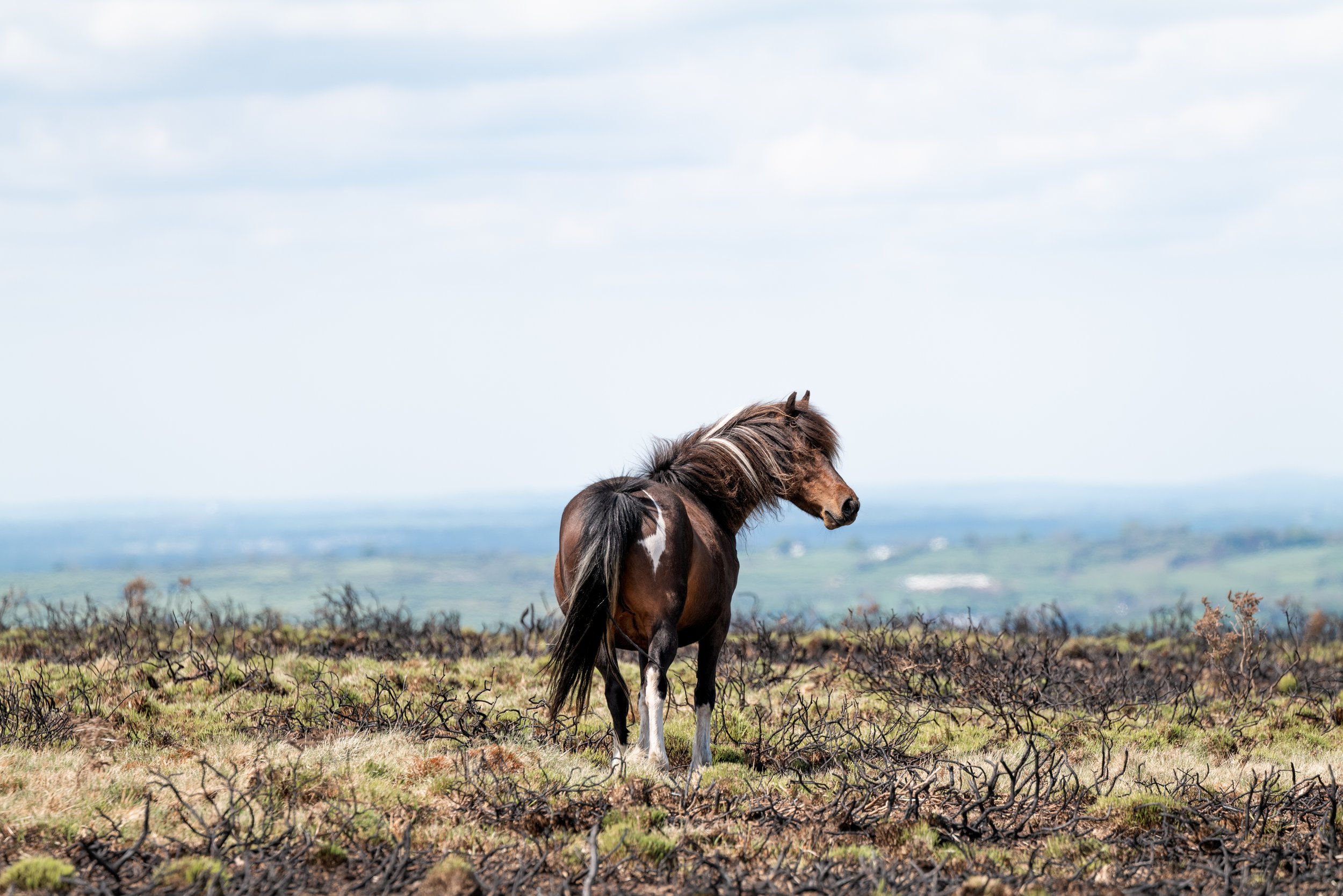
As much as the ponies themselves are the focus of many of the objectives, the land on which they graze is of equal importance. We would work with various environmental bodies and individuals to improve the understanding of appropriate sustainable management.
Native ponies are selective grazers and therefore help create and maintain structural diversity in their habitats, creating vegetation mosaics of short grass and undisturbed flora whilst simultaneously reducing the otherwise inevitable spread of scrub. This mosaic creates a great environment for many species such as wild orchids to flourish. However, stocking rates and timing of grazing are of particular importance as otherwise the land can become poached and horse-sick.
The charity would provide a resource providing details of important research and experiences from conservation grazing projects across the country for others to learn from. We would also like to encourage the use of herds of rare breeding native ponies in conservation grazing, managed by people with appropriate knowledge and experience, rather than organisations using imported animals or gelded herds. These animals are well-adapted to the climate and conditions they will face in expansive habitats and land managers should be encouraged to use them. Exmoor ponies have had a remarkable recovery of numbers since being promoted in this way and we would like to see this extended to other breeds.