

Fell
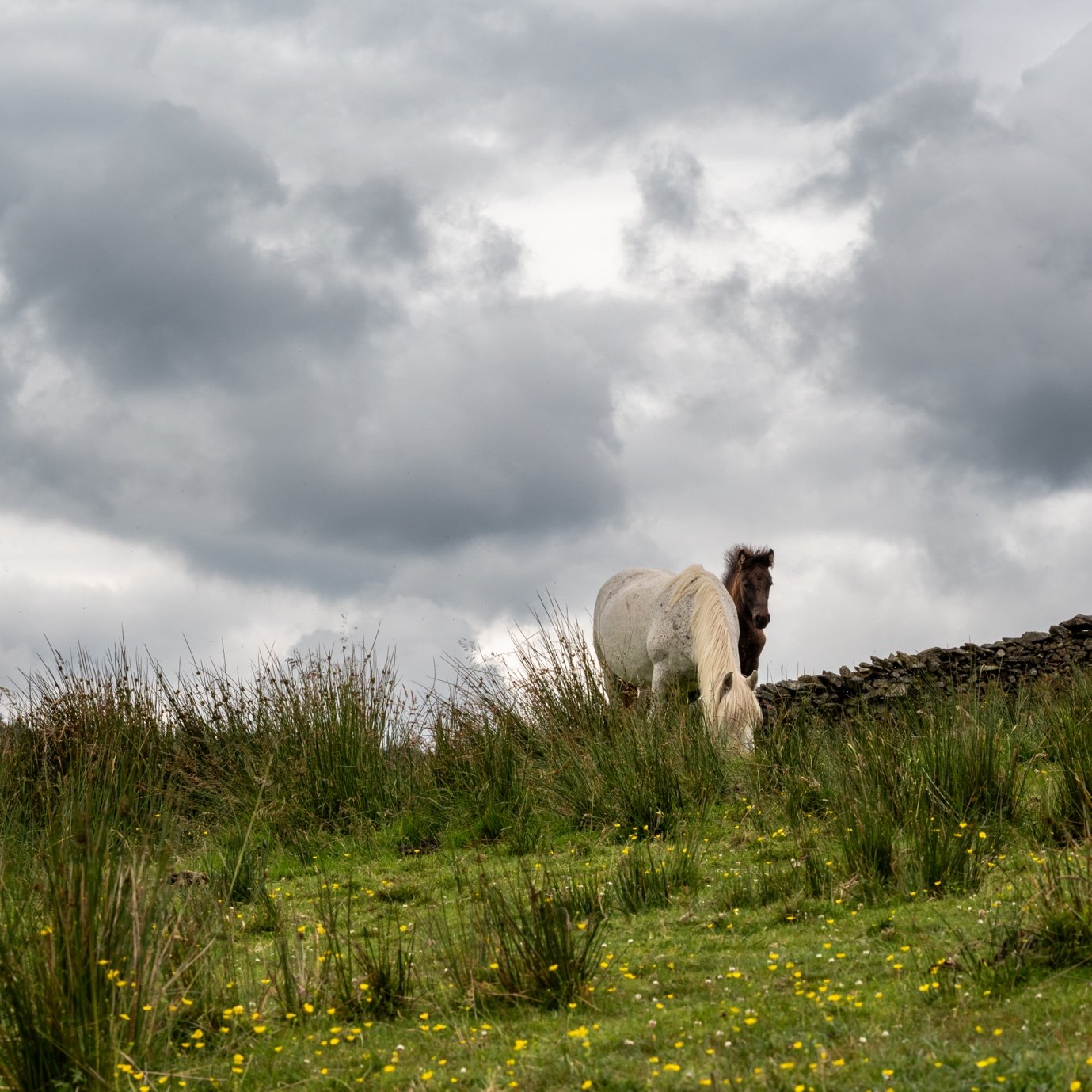
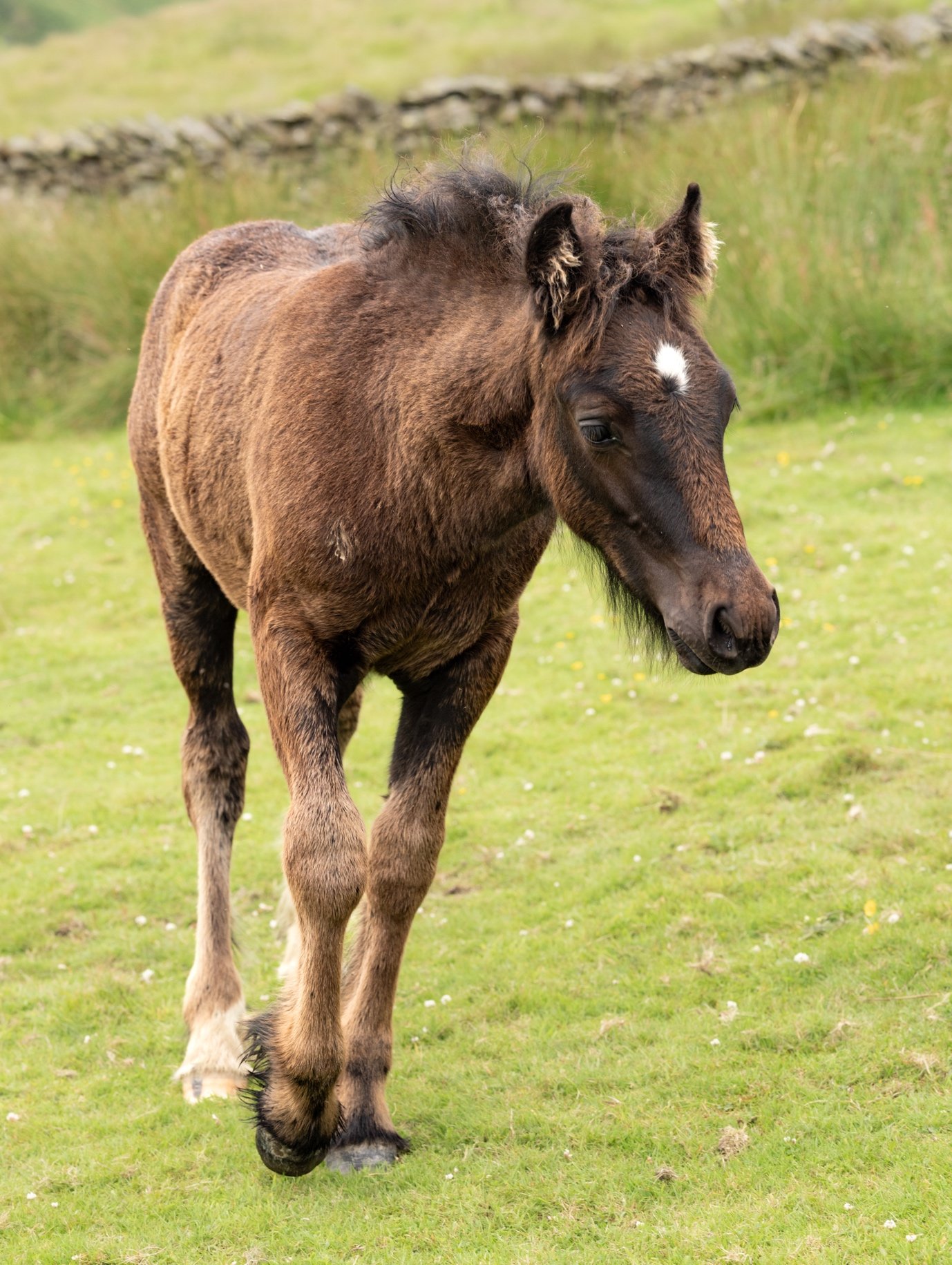
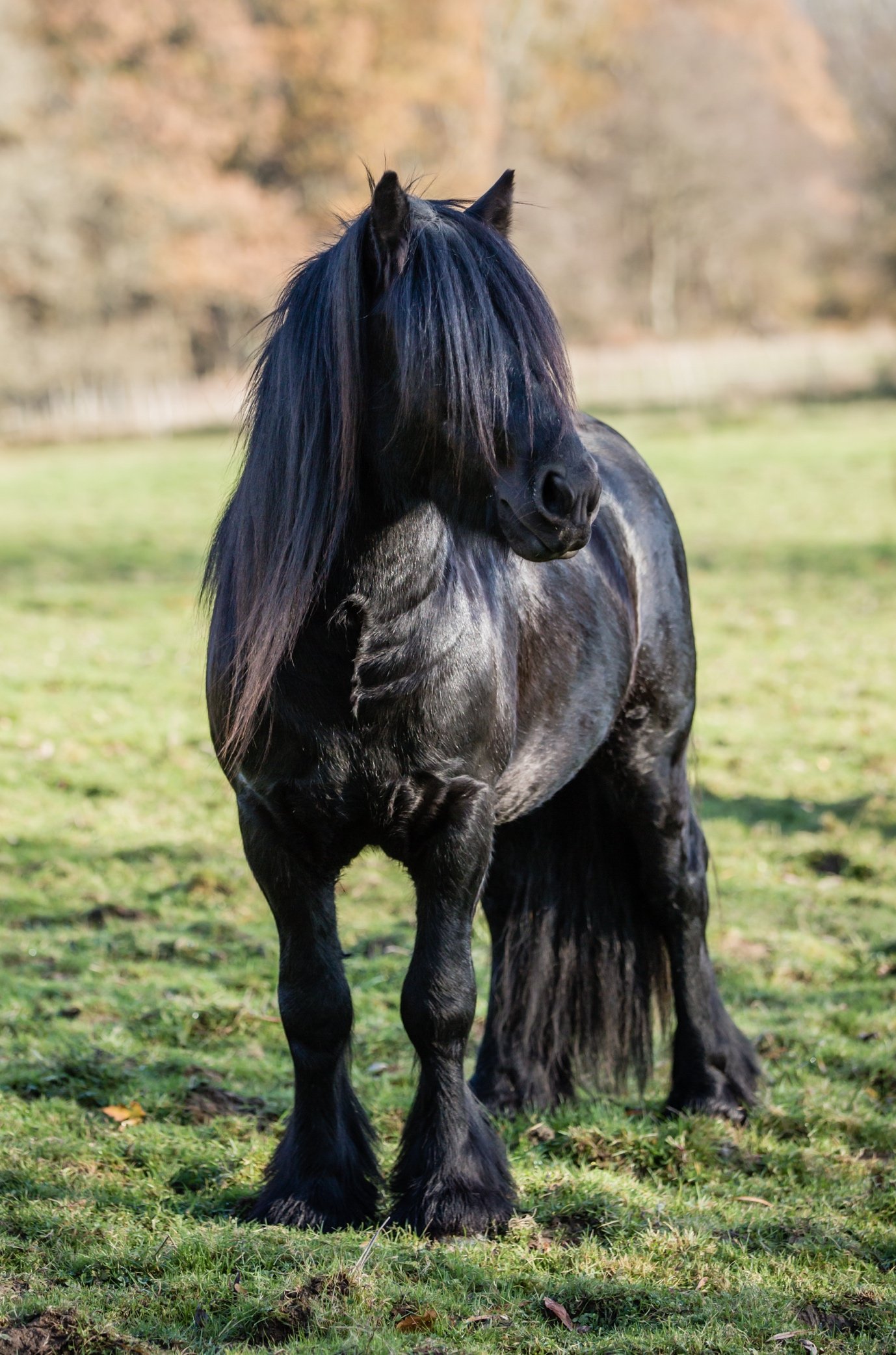
The Fell pony is a breed of horse that originated in the north of England, specifically in the Lake District area, which includes parts of Cumbria, Lancashire, and Northumberland. This rugged and hilly region is where the breed has lived for centuries and developed its hardy, sure-footed characteristics that make it so well-suited to the terrain. Fell ponies can still be found in this region today, but they are also bred and raised in other parts of the world.
They are a hardy breed, known for their strength, agility, and endurance. Fell ponies are usually between 12 and 14 hands (48 to 56 inches) tall and weigh between 400 and 600 kilograms (880 to 1,320 pounds).
The breed is well-suited for life in rugged and hilly terrain, with strong, surefooted legs and a compact, muscular body. Fell ponies are typically black, but they can also be brown, bay, or grey, and they have a thick mane and tail that grows long and wild.
Fell ponies are versatile and can be used for riding, driving, and packing. They have a gentle and willing temperament, making them suitable for novice riders, but they are also strong and agile enough for more experienced riders. They are intelligent and responsive, making them popular as both work and show animals.
The Fell pony is an endangered breed, with only a few thousand individuals remaining worldwide (classified as rare by the RBST). There are several threats that have led to a decline in their population including:
Loss of habitat: The Fell pony's native habitat is in the Lake District area, which has undergone changes in land use due to development, farming, and tourism. This has led to a loss of habitat and grazing areas for the ponies.
Competition with other livestock: Fell ponies are often kept in areas where there are competing livestock such as sheep and cattle, which can reduce the availability of grazing land.
Decline in demand: The demand for the Fell pony has decreased over time, as there are other horse breeds that are more popular.
Inbreeding: The Fell pony population is relatively small, which can lead to inbreeding and a loss of genetic diversity. This can increase the risk of health problems and reduce the breed's ability to adapt to changing environments.
Efforts are being made to address these threats and increase the population of the Fell pony breed. Conservation programs and breeding initiatives are aimed at preserving the breed's genetic diversity, promoting responsible breeding practices, and increasing awareness of the breed's value and importance.
This is the message from film-maker Tom Lloyd, whose series of short fell pony documentaries featuring breeders at Shap, Sedbergh and Penrith, premiered at Penrith cinema. Mr. Lloyd, of Newby Bridge, said his original intention was to capture the beauty of this traditional breed but within weeks of filming he realised he was being confronted by a far more serious issue.
“It became clear pretty quickly that the real problem facing fell ponies is that the younger generation just aren’t coming forward to take over the herds,” he said. “All the people in my documentaries are older and the fear is once this generation has died there will be no one left with the knowledge and passion to keep them going.”
There are around 250 semi-feral fell ponies in 12 herds living wild in Cumbria, with just a handful of breeders maintaining the herds and feeding them regularly.
“There are fell ponies all over the world but the ones in Cumbria are unique, living in their natural environment. The landscape is shaped by them. Of course, ponies would survive but once they are off the hills you would lose the gene pool which gives them their hardy characteristics and that would be a great shame,” he said.
Long hours involved in keeping a herd and the expense of starting out are among the reasons revealed in the documentary as to why younger people are not taking them on.”
Books about Fell ponies, which all portray their life on the fell:
“Fell ponies were known from all over the old counties of Cumberland, Westmorland, Furness, parts of Yorkshire and Northumberland, and Galloway in southern Scotland. All these were part of the area once known as the Kingdom of Rheged. Old farmers still refer to them as Fell-Galloways.”2
“We now run mares and a stallion on 100 acres of fell looking out over Morecambe Bay. When I took over the stud from Walter there were about 30 ponies but nowadays our numbers are down to around 10 or 12 ponies - five brood mares with young stock coming on. I have four bloodlines which I am preserving, including Hades Hill Pat, the first pony I was given at the age of 3. They live out all year and when they are not in foal they are all driving ponies and will be worked through spring and summer. My sister, Caroline, played a big part in managing the herd in the 1970's, and my brother Bill is still involved with helping to maintain the hill herds.”
“Without a doubt, the biggest concern for the future of the breed is losing more of the semi-feral herds that run out on the open fells, and with them the hardiness and characteristics of the breed that have made them what they are. There is no doubt that the landscape is changing. Although many farms have registered common rights for horses, very few use them, and NatUral England and many of the big landowners and sheep farmers discourage ponies, though David Anthony Murray and others have done much good work to show the benefit of Fells for conservation grazing. The problem we are facing now is how we preserve the herds we have and also establish new herds running out on open fells. There is no shortage of youngsters wanting to get into the breed. I would like to see the landowners and institutions coming together to find ways for the new generation of breeders to get a foothold on the commons”
A Fell Pony Heritage Centre is to be established in Cumbria after landowners agreed the use of a site in Tebay.
Low Borrowdale Farm is to host a “hefted” herd of 12 Fell ponies, and will promote the rare breed as well as creating a research facility to study the relationship between native ponies and their environment.
Lifelong Fell enthusiast and former agricultural lecturer Libby Robinson is behind the project, which she hopes will include displays of the ponies undertaking traditional tasks.
“It has always been a dream of mine to be able to help the Fell pony; I am very passionate about them as they are such a wonderful breed, strong and sufficiently up to height at 14hh to be useful,” she said.
“I used to run agricultural courses and we’d have them pulling chain harrows and timber snigging [removing felled wood] and I also worked at the Black Country Living museum in Dudley where they created a working carter’s yard. The Fell ponies would demonstrate the equipment, manoeuvring canal boats and showing how a working pony carted coal and tipped it. I hope it would be part of the heritage centre to keep these skills going”
The relationship between native ponies, their grazing habits and the biodiversity of their environments has become something of which ecologists are increasingly aware.
Breeders also appreciate the importance of “hefted” herds — those that graze a specific portion of land and develop genetic traits in response to their environment — in producing true-to-type stock.
Libby hopes the centre will give the opportunity for students to undertake further research in these areas, using the 334-acre farm which is “ideal Fell pony country”, occupying a range of 600ft-1000ft.
“I hope people will be able to study the impact of the Fell ponies on the fell and hopefully it will also become an advisory centre for hill farmers and give them a voice to explain what it is like to be part of the environment they live in,” she said.
“The centre will bring together all the amazing history that makes the pony what it is today, show what we did with it in the past and look at how to make a future for them.”
Unlike other British native breeds such as the Exmoor and Dartmoor, it has not been permitted to run stallions on the fells with the mares since the late 20th century, meaning population control has not been a critical issue.
There are currently just over 280 foals born worldwide every year and an estimated 83 mares on the Cumbrian fells.
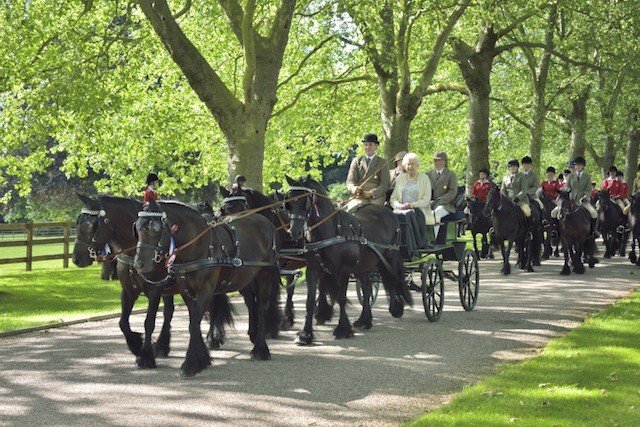
A cavalcade of 120 Fell ponies turned out to honour The Queen for her 90th birthday in 2016
The society said forming the guard of honour was a 'once in a lifetime experience'
“We aren’t at risk of losing the Fell pony, so much as losing its habitat,” said Libby.
“It’s important to have a core pool of native ponies breeding pure-to-type because of their environment. It’s been proven genetically that if they are taken away from their place of original breeding, they will lose the genetics that make them what they are. Even three or four generations on, you will not be able to put back their lost ability to survive the conditions,” she explained.
“In the recent snow and that east wind that went through the north, there were groups of ponies up to 1,200 ft and they were happily coping as part of the environment with their own thermal blankets.”
The centre is expected to be open and running within the next two years.
Read more at https://www.horseandhound.co.uk/news/centre-aims-promote-rare-breed-risk-losing-habitat.
Books about Fell ponies, which all portray their life on the fell:
Hoofprints in Eden, 2005 (Millard: Hayloft publishing)
A Walk on the Wild Side, 2008 (Morland: Hayloft publishing)
Spirit of the Fell Pony, 2008 (Hallam: Halsgrove)
All three are available from the Fell Pony Society's Merchandise page.